



For sale SIA
✅ Key points at a glance — Sale of an SIA (company) via URonline ✔Price: customized offer following a free company valuation ✔Payment: to your bank account


Forming and registering an association – In this article, you’ll find all the necessary information about the process of establishing and registering an association, the required documents, and the costs.
Before you start the process, make sure you have everything you need for a quick registration:
Choose a unique name (in Latvian only) and define the objectives of the association.
The easiest way to register a registered office is in a property you own, a house or an apartment.
Find at least 2 founders (individuals or legal entities) and appoint a board of directors (at least 1 person).
Prepare four key documents:
The founding resolution (or minutes);
Bylaws (rules governing the association's operations);
Application (Form B2) for registration.
Electronic Signing: Ensure that all founders and board members have an active eSignature. All documents must be digitally signed.
Documents are submitted and state fees are paid on the Enterprise Register platform.
Upload the documents to the Enterprise Register portal and pay the state fee 11.38 EUR.
What is an association? An association is a voluntary association of persons formed for the purpose of pursuing a non-profit-making objective as defined in its statutes.
The founders of an association may be either natural persons or legal entities, but the number of founders must not be fewer than two.
The Society shall have the right to engage in economic activities in order to pursue its objectives and to ensure its activities.
The Law on Associations and Foundations regulates the fundamental principles of operation, organizational structure, liquidation, and reorganization of associations and foundations.
The association is considered a legal person.

The objectives of the Society must be non-profit-making, clearly defined in the Statutes and must not be contrary to the laws of the Republic of Latvia or aimed at making a profit for the members.
When planning to establish an association, the most energy is often devoted to choosing a name or the composition of the board. However, from a legal and practical standpoint, the most important thing is to clearly define why the association will exist and exactly what it will do.
Have a clear vision of what your association's purpose and mission are and what areas of activity it will cover.
The objectives of the Society can be described in free form.
Clarity and precision: The objective must be specific enough to convey the association’s focus (for example, “to promote the development of basketball in the Sigulda region”), but broad enough so that the bylaws do not need to be amended after a year.
Multiple objectives: An association may have one or more objectives. For example, environmental protection and educating the public about waste sorting.
Tip: When writing your goal, think of it as a promise. Avoid overly general phrases like “improve everything,” but don’t get bogged down in details either.

The Society's fields of activity are officially classified activities that must be specified in the application for registration in order to define the Society's main objectives and planned activities.
Associations are classified in accordance with classification of fields of activity, which is approved by the Cabinet of Ministers and includes 23 fields of activity.
Associations and foundations must specify their field of activity. Multiple fields of activity may be specified at the same time, but no more than five (5).

The name of the Society must be unique, written in Latvian and must not include the words 'state' or 'municipality'.
Check that the name of the association you choose is not already in use and that it complies with legal regulations.
The name of the association cannot be the same as any name of an entity already registered with the Register of Enterprises or for which a registration application has been filed. Existing names can be checked in the Lursoft database.
Finding the perfect name for your association may not be so difficult. However, there are some limitations to consider:
The management structure of the Society shall necessarily consist of the Meeting of Members as the supreme decision-making body and the Board as the executive body, with at least one member of the Board.
Decide on the creation of a board or council and determine its members and powers.
A member of the association’s board is responsible for the association’s assets and their management, its commercial activities, and the maintenance of accounting records in accordance with the law, as well as for the association’s financial resources.
The Management Board is usually appointed at the time of the Society's foundation.
The right of representation of a member of the Board of Directors must be defined - to represent the Society alone or together with another member of the Board.
The registered address of the association must be registered in the National Address Register and the consent of the property owner would be desirable.
You cannot set up a society without a registered office.
The association needs to register a registered office address where messages, documents or other correspondence are sent.
The easiest way to register a registered office is in a property you own, a house or an apartment.
A legal address might also be in another property. In this case, it is advisable to negotiate with the owner of the real estate to avoid problems in the functioning of the association. Consent does not have to be given to the Registrar of Companies!
For example, when renting out premises, landlords usually agree to register a legal address.
A Virtual Office, or an address where only correspondence is received, is also popular.
The registration process is a fully digital procedure on the portal of the Register of Companies, where at least two founders submit signed documents and pay the state fee, receiving confirmation within 7 days.
To establish an association, four main electronic documents must be prepared: the founding resolution, the bylaws, application form B2, written consent from board members to accept their positions, which must be signed by all founders and board members with a secure electronic signature (eSignature).
Documents are submitted and state fees are paid on the Enterprise Register platform.
Starting the registration service is done by filling in the online application form and providing the name of the intended association, the founders' details and the objectives of the activity.
The documents for registration of the association must be submitted electronically via the customer self-service portal of the Register of Enterprises (registrs.ur.gov.lv), at the same time as the state fee is paid.
Don't forget to electronically sign the documents you submit. Each document must be signed separately.
The association's founding documents are submitted electronically at on the Enterprise Register’s self-service portal , with all attachments signed using a secure electronic signature (eSignature).
E-documents submitted are examined by the notary within 7 days.
To establish an association, four main electronic documents must be prepared: the founding resolution, the bylaws, application form B2, written consent from board members to accept their positions, which must be signed by all founders and board members with a secure electronic signature (eSignature).
Below you will find the necessary documents for setting up the association.
Sample documents can be found on the Company Register website.
Specific knowledge and expertise are needed to complete and submit the required documents accurately.
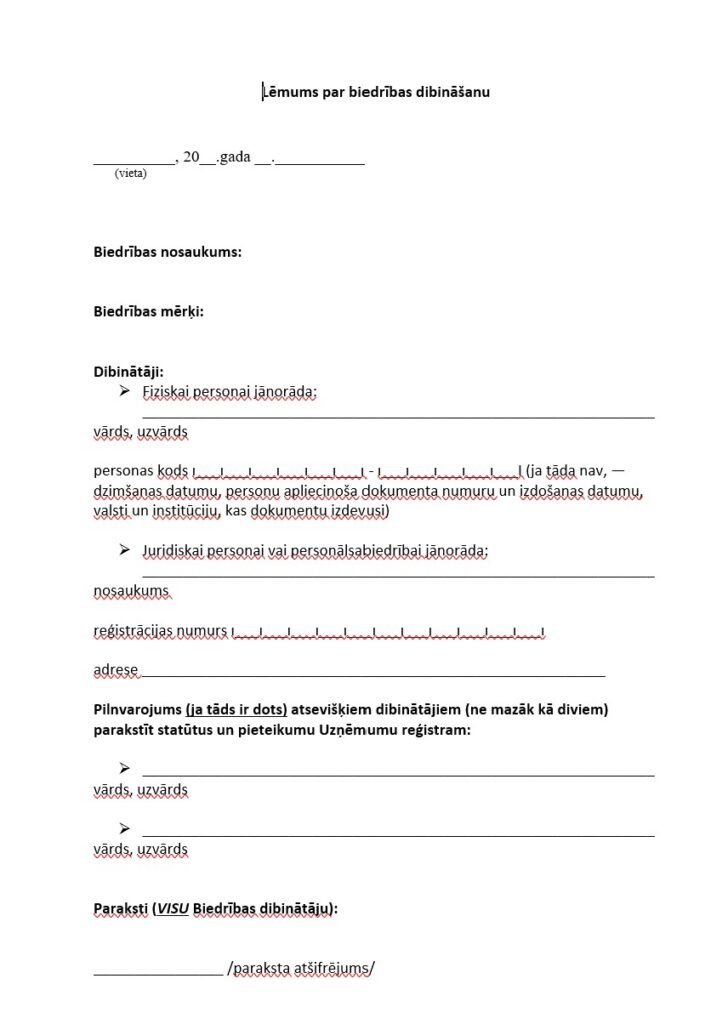
The founding decision shall be signed by all the founders.
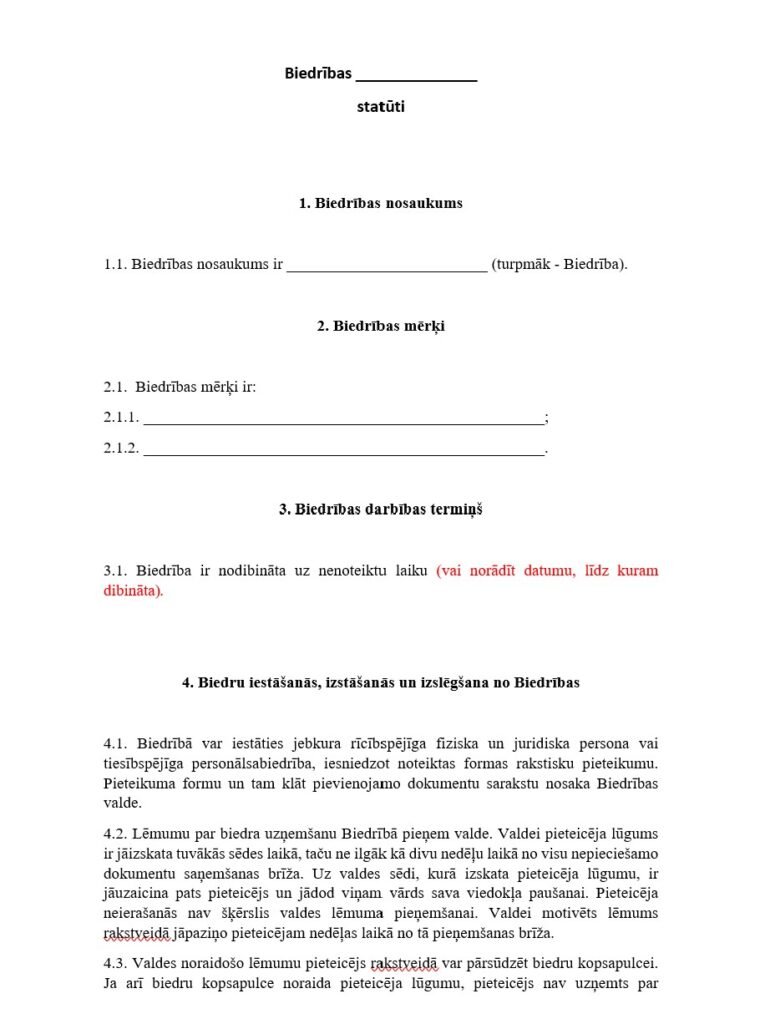
The Statutes set out the main principles of the Society. The statutes shall be signed by all the founders or by at least two founders authorised to sign the statutes in the instrument of incorporation.
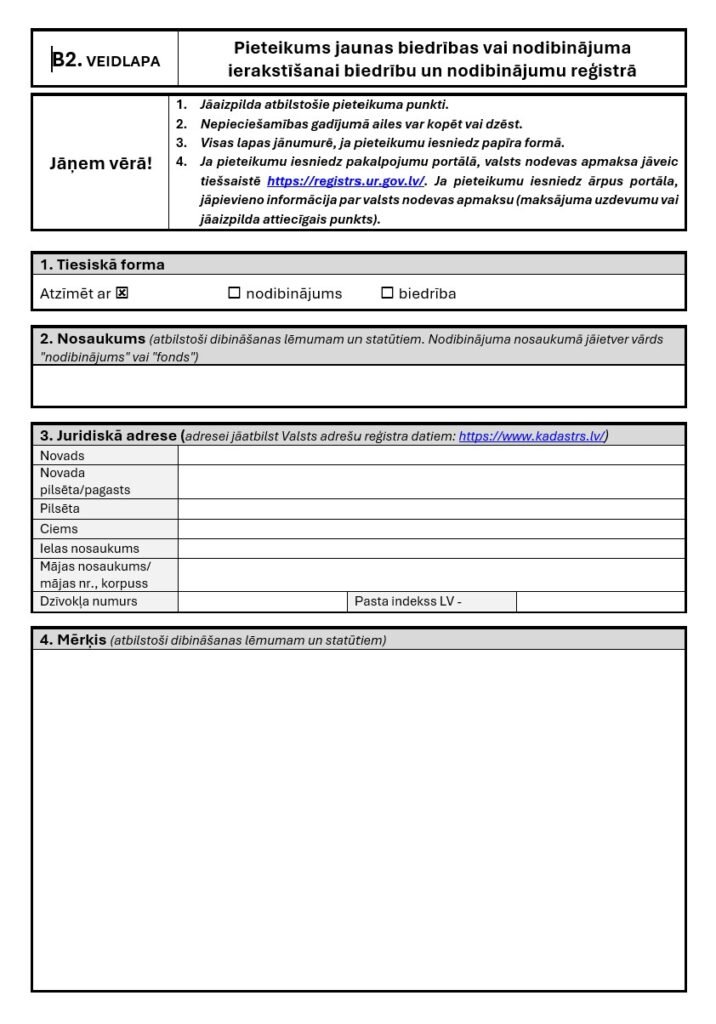
The application shall be signed by all the founders or by at least two founders authorised to sign the application in the instrument of incorporation.
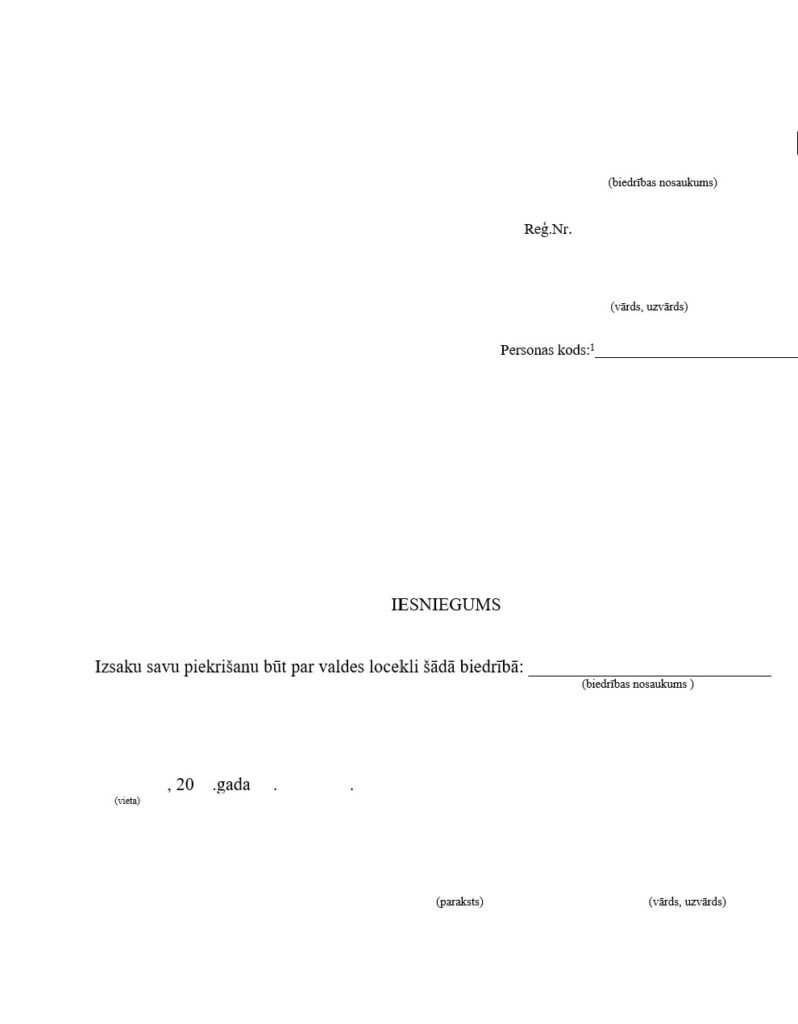
Each member of the Board must sign and submit a consent to hold office in the Society.
The registration fee is EUR 11.38.
Preparation of e-documents for association registration in the Commercial Register typically costs between 35 and 80 EUR, depending on the service provider’s rates and the number of documents that need to be prepared.
What is included in the URonline Association Formation Service?
Registration of an association in the Register of Enterprises is an official process for obtaining the status of a legal entity, which takes place electronically on the registrs.ur.gov.lv portal by submitting documents signed by at least two founders and paying a state fee of EUR 11.28.
Online service.
Documents must be submitted via the Enterprise Register service portal.
Documents must be signed with an e-signature using a smart card (eID or eSignature card) or via the eSignature mobile portal www.eparaksts.lv
You will receive a response via the e-service or at your e-mail address.
Send electronically signed documents to the e-address or to the Enterprise Register's email address.
e-address is a more secure channel of communication between the individual and the state than email
By post.
Signed documents can be sent to the Register of Companies by post.
The payment order for the stamp duty must be enclosed in the consignment.
Jnote that only notarised documents can be sent in this way, which significantly increases the cost of registering the association.
Authentication of signatures and capacity to act on applications and requests to public registers (e.g. Land Registry, Commercial Register) costs around €23.
In addition, there are fees for data checks, VAT, stamp duty, translation and actual costs.
Often, there is insufficient prior checking. The most common problems with the name are:
B The name is already taken:Before submitting documents, it is important to check whether the chosen name is already registered in the registers maintained by the Enterprise Register, for example, by using the Lursoft database. The use of punctuation marks, spaces, or uppercase and lowercase letters is not considered a sufficient distinction.
The name is misleading: It must not contain misleading information about the purpose, nature, or legal form of the organization (for example, including the word “fund” or “foundation” in the name of an association).
Prohibited words:The name must not contain the words “state” or “municipality,” nor the name of the Republic of Latvia or its translations.
Trademark conflict:The name must not conflict with an already registered trademark. This can be verified in the Patent Office database.
The most common problems that can cause the Register of Companies to delay or refuse registration are:
Incorrect application form.
One of the required documents is missing, such as the consent of a board member.
Documents are not signed with a secure electronic signature (eSignature) or not notarised (if sent by post).
No payment of the stamp duty or proof of payment.
No, since the legislative change, the owner's written consent is no longer required to be submitted to the Registrar of Companies. However, the applicant (e.g. the board of directors) must certify that the association has a legal basis for being at the address and can be reached there. To avoid problems in the future, it is advisable to have an agreement with the owner, especially if it is not one of the founders.
Yes, a foreigner can be a member of the association and a member of the board of directors. If the person does not have a personal identification number of the Republic of Latvia, an additional questionnaire for inclusion in the Register of Natural Persons must be submitted. It is important to ensure that the board member is not prohibited by law from holding this position.
The main problem is the unreachability of the association at its registered address. Correspondence sent to the registered address is deemed to have been received on the seventh day after posting. If the association is not actually at that address and does not receive mail, this can have serious consequences, including legal action for dissolution. The address must also correspond exactly to the National Address Register.
To set up a society, you need at least two founding members. These can be either natural or legal persons.
The following documents must be prepared and submitted for registration:
Application form (Form B2)
Founding resolution signed by all founders
Statutes
Written consent of each member of the board to hold office
Registration costs are made up of two parts:
State fee: The standard state fee for registering an association is 11.38 EUR. If you submit documents electronically and choose to receive a response electronically, the 10% discount applies.
Document preparation:If outsourced, document preparation costs can range from 35 to 80 EUR.
Yes, associations of disabled persons, orphans or large families, as well as associations whose purpose is to organise sports events for children and schoolchildren, are exempt from the stamp duty.
The statutory time limit for examining documents is 7 days, excluding the day of submission. However, this time limit may be extended if necessary for additional checks.
Yes, an association is entitled to carry out economic activities if they serve the objectives of the association and if the profits are not distributed among the members but are channelled towards the objectives set out in the statutes.
If the notary public of the State Register of Companies finds deficiencies in the documents submitted (e.g. inaccuracies in the statutes, errors in the application form), he will decide to postpone the registration and set a deadline for the deficiencies to be corrected. If the deficiencies are not remedied within the deadline, the registration will be refused.
Yes, for new associations that are registered, it is compulsory to indicate the scope of their activities at the time of incorporation. Previously registered societies had to provide this information in their annual report for 2024. Societies are classified according to a classification established by the Cabinet of Ministers.
Mistakes often occur when the type of company is incorrectly reflected in various documents or when the cadastral designation of the registered office is incorrect.
The Register of Companies may refuse registration if the documents submitted do not comply with the requirements of the regulatory enactments or if the information contained therein is unclear. Often not all the required sections are filled in or there are inconsistencies between different documents (e.g. the memorandum and articles of association).
Registration requires a registered office. Problems arise if the address does not correspond to the National Address Register or if the property owner's consent has not been obtained. If the property has several owners, the consent of all is required. Sometimes an address is given where it is not actually possible to receive correspondence, which can cause problems with public authorities in the future.
The law requires disclosure of information about the beneficial owners of the company - natural persons who directly or indirectly control the company. Failure to provide this information or providing false information is grounds for refusal of registration.
The statutes must contain certain details, such as the name, the objectives of the association and the number of board members. No details of the founders or registered office may be given, as this information may change and is recorded in other documents.
The Statutes do not contain all the mandatory information required by the Law on Associations and Foundations. For example, there is no clear definition of the procedure for convening the members' meeting, the representation rights of board members (individually or jointly) or the rules of the audit body.
Make sure the documents are in the correct format.
Documents must be signed with a secure electronic signature and time stamp.
Before submitting the documents, you must make sure that the amount of the stamp duty is correct and that you have paid it. Any incorrect or overpaid amount can be recovered by applying to the Companies Registry.
If the UR finds an error, the notary public postpones the decision for up to 30 days, pointing out the deficiencies. It is important to react promptly to such decisions and make the necessary corrections so that the registration process is not delayed and stamp duty is not lost.
If there are several members on the board, it is necessary to determine precisely their rights of representation - whether each can act alone or only together. A situation should not arise where one member has only a formal right of representation.
Each member of the Management Board must submit a written consent to hold office. Often this document is forgotten or not properly executed.
A non-existent address or an address for which the owner's consent has not been obtained (although the consent does not have to be submitted to the UR, the board must certify its existence). A major problem arises if the association cannot be reached later at its registered address.
According to the latest amendments, when registering an association, it is compulsory to indicate its field of activity according to the classification.
Founders are often not fully aware that a member of the Management Board is responsible for the assets, accounts and liabilities of the association. A Board member must fulfil his or her duties as a decent and caring steward.
Website of the Register of Companies (UR): [https://www.ur.gov.lv/]
State Revenue Service (SRS) website: [https://www.vid.gov.lv/]
Commercial Law: [https://likumi.lv/]
✅ Key points at a glance — Sale of an SIA (company) via URonline ✔Price: customized offer following a free company valuation ✔Payment: to your bank account

What is an Extraordinary Dividend? (2026) An extraordinary dividend is a portion of the net profit for the current reporting period that is distributed to owners,